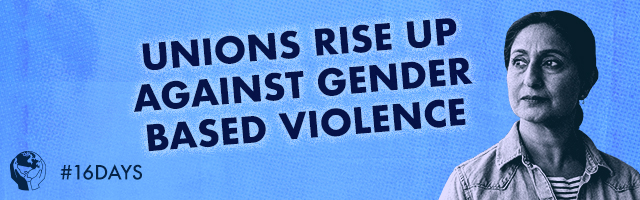
Canada’s unions rise up for justice for gender-based violence (GBV) workforce
As we mark the National Day of Remembrance and Action on Violence Against Women
in Canada, unions are putting the spotlight on the deplorable conditions facing the
workers who are on the front lines of this epidemic, and who put their wellbeing on the
line every day to support survivors of gender-based violence (GBV).
“Despite providing vital, life-changing services to survivors of violence, their families,
and communities across the country, Canada’s GBV sector remains severely
underfunded and faces similar challenges to other women and gender diverse majority
workforces,” said Siobhán Vipond, Executive Vice-President of the CLC.
A groundbreaking new study on the GBV workforce outlined that this workforce is
primarily made up of women (89%) identified workers, with a large proportion (67%)
also identifying as a member of at least one other equity group. Unfortunately, the
systemic devaluation of this work, as well as the consistent and never-ending financial
precarity facing the sector, makes it impossible for far too many GBV workers to sustain
themselves and their families when compensation for these critical jobs fail to keep up
with the rapid increases in cost-of-living post pandemic.
In fact, one in four GBV workers in this study revealed that they experienced
consistent employment insecurity.
“The lack of consistent and reliable funding for the sector is pushing GBV workers to the
margins of an already worsening national affordability crisis facing us all,” adds Vipond.
In addition, GBV work is trauma-exposed work that carries significant occupational
health and safety risks. According to that same study, just over half of respondents
(56.2%) shared they feel emotionally exhausted and/or worn out due to their work, and
50% agreed the vicarious trauma negatively impacts their mental health and personal
life.
Canada’s GBV sector needs core, stable and adequate funding from governments to
protect occupational health, safety, and wellness of workers.
This is why Canada’s unions are calling for our federal government to develop a
workforce strategy for the sector, in collaboration with unions and sector organizations,
to improve wages, working conditions, and retention. This strategy must be part of
broader efforts towards comprehensive, long-term funding to sustain the feminist and
women’s rights organizations that provide life-saving services to survivors across the
country.
“Promises and half-measures are not enough; workers are ready to rise up for justice
for the GBV workforce, and demand that our elected leaders take action to meaningfully
support and sustain the gender-based violence sector,” said Vipond.
Learn more about the state of Canada’s Gender-Based Violence Workforce here.